The Garden for Everyone
In a Nutshell
Sophie and her classmates transformed an abandoned neighborhood garden into a beautiful community space. Their teamwork and kindness inspired neighbors, brought back precious memories for older residents, and encouraged other communities to begin similar projects.
Introduction
The Story
At the end of Maple Street stood an empty piece of land.
Years ago, it had been a beautiful flower garden where families gathered during weekends. Children chased butterflies, grandparents rested on wooden benches, and colorful flowers bloomed throughout the seasons.
But over time, the garden had been forgotten.
The benches became worn.
Weeds covered the pathways.
Broken flowerpots lay scattered across the ground.
Most people simply walked past without noticing it anymore.
One Saturday morning, twelve-year-old Sophie rode her bicycle past the old garden.
She stopped for a moment.
"It used to be beautiful," she said softly to her grandfather, who was walking beside her.
Her grandfather smiled.
"Places become beautiful when people decide to care for them."
Those words stayed in Sophie's mind.
The next Monday, she shared an idea with her classmates.
"What if we bring the garden back to life?"
Some students looked surprised.
"It will take too much work," one replied.
"We're just children," another added.
But Sophie's best friend, Daniel, raised his hand.
"If we each do a little, maybe it won't feel impossible."
Their teacher, Mrs. Green, loved the idea.
She contacted the neighborhood association, and soon families, teachers, gardeners, and local volunteers agreed to help.
The following Saturday became the first Community Garden Day.
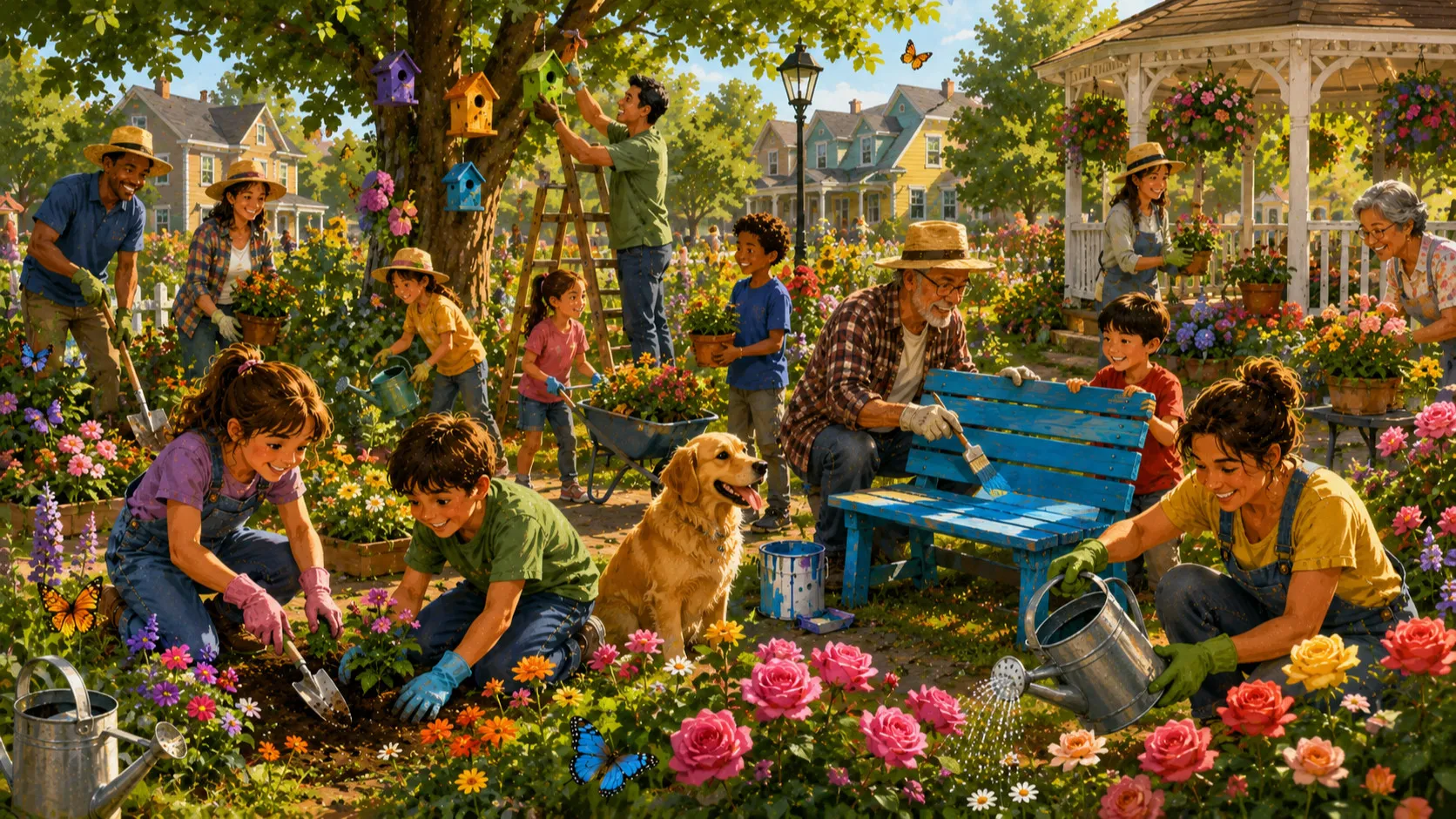
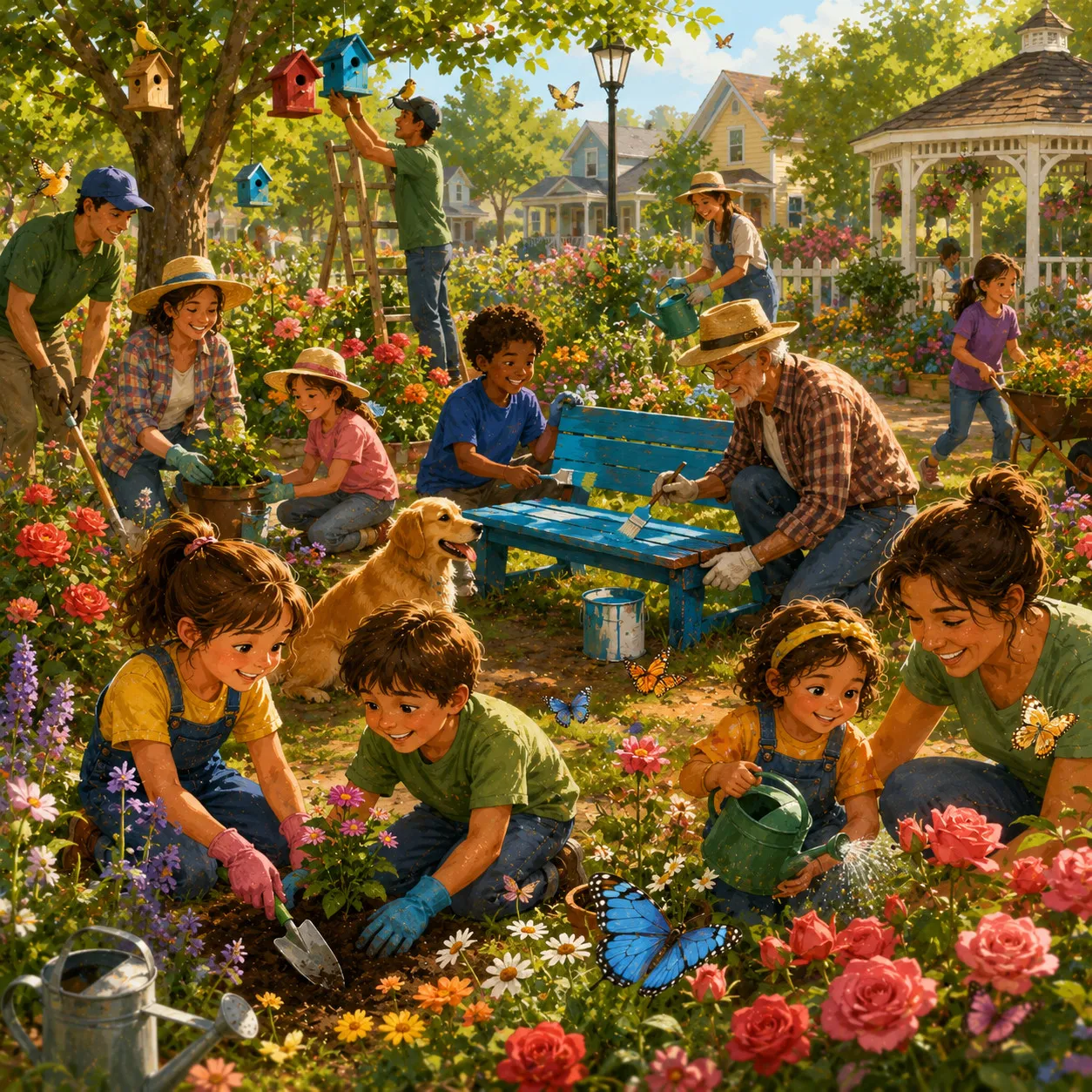
Everyone arrived wearing old clothes, gloves, and wide smiles.
Some children collected litter.
Others painted the old benches.
Parents repaired broken fences.
A local carpenter built new birdhouses.
Grandparents shared stories about flowers that had once grown there.
Even younger children helped by watering newly planted flowers.
By lunchtime, everyone was tired but happy.
The forgotten garden already looked brighter.
Over the next several weeks, the project continued.
The students planted roses, marigolds, sunflowers, lavender, and colorful wildflowers that attracted butterflies and bees.
Daniel built small wooden signs with the names of each plant.
Sophie created a Kindness Corner, where visitors could leave handwritten messages of gratitude or encouragement for others.
Soon the board filled with cheerful notes.
"Thank you for planting flowers."
"This garden makes my walks happier."
"You made our neighborhood beautiful again."
One afternoon, an elderly man named Mr. Carter visited the garden with his granddaughter.
He quietly sat on one of the newly painted benches.
Sophie noticed tears in his eyes.
"Is everything okay?" she asked gently.
Mr. Carter smiled.
"My wife and I used to visit this garden every Sunday."
"She loved the roses."
"Seeing children bring it back makes me feel as though a happy memory has bloomed again."
Sophie sat beside him for a while.
She realized that kindness was not only about helping today.
Sometimes it also honored yesterday.
As the seasons changed, the garden became one of the town's favorite places.
Families gathered for picnics.
Artists painted flowers.
Birdwatchers enjoyed the new birdhouses.
Students read books beneath the trees after school.
The mayor visited during the town festival and admired the transformation.
"This garden wasn't restored because someone was paid to do it," she said.
"It was restored because children chose kindness over convenience."
Inspired by the students, nearby neighborhoods began creating their own community gardens.
Some planted vegetables for local food banks.
Others built butterfly gardens or reading corners.
What had begun as one small idea spread across the town.
Years later, Sophie became a landscape architect who designed parks where children, families, and older adults could enjoy nature together.
Daniel became an environmental teacher.
Whenever they worked on community projects, they remembered the old garden on Maple Street.
At the entrance of every park Sophie designed, she included a simple wooden sign.
It read:
"A beautiful place begins with a caring heart."
Visitors often paused to read those words.
Some smiled.
Some nodded.
Some decided to pick up a piece of litter, water a flower, or help another visitor.
And that was exactly the point.
Because kindness is much like a garden.
It grows when people care for it together.
Every helpful hand plants another seed.
Every thoughtful action helps another flower bloom.
And every act of kindness makes the world a more beautiful place for everyone.
Vocabulary Words
The Moral
Kindness becomes even more powerful when it improves life for everyone.
Life Lesson
Working together with kindness can transform not only places but also the hearts of the people who share them.