The Honest Merchant
In a Nutshell
Dev Sharma, a kind and truthful merchant, found a farmer's money pouch after market day. Instead of keeping it, he returned every rupee without expecting a reward. His honesty earned the trust of customers, helped his business grow, and inspired others to follow the same values.
Introduction
The Story
Every Friday morning, the village market came alive with cheerful voices, colorful stalls, and the inviting smell of fresh bread and spices. Among dozens of shopkeepers stood a neat little store owned by a merchant named Dev Sharma.
Dev sold grains, spices, cooking oil, dried fruits, and handmade baskets. His shop was not the biggest, nor did it have the fanciest decorations, but customers enjoyed visiting because everything was well organized and fairly priced.
Before opening his shop each day, Dev cleaned the shelves, checked the weighing scale, and arranged every product carefully. He believed that even small acts of honesty began with doing every job properly.
One summer afternoon, a farmer named Rohan stopped by after selling vegetables in the market. He was tired and carried a small leather pouch filled with the money he had earned during the week.
"I need ten kilograms of wheat, some rice, and cooking oil," Rohan said.
Dev packed everything carefully while chatting about the coming harvest. After paying for his purchases, Rohan thanked him and hurried home before the evening rain.
As Dev swept the floor after sunset, he noticed something lying beneath a wooden bench.
It was the leather pouch.
He picked it up and gently opened it, hoping to find some clue about its owner. Inside were several neatly folded notes and a handwritten list of vegetable prices. Dev immediately recognized the writing.
"It belongs to Rohan," he said quietly.
The money was enough to buy new furniture for the shop or repair the old roof before the rainy season. No one had seen the pouch fall. He could have kept it without anyone knowing.
Instead, Dev locked the pouch inside a small cabinet and decided to return it first thing the next morning.
Before sunrise, he walked nearly five kilometers to Rohan's farm.
When Rohan opened the gate, his face looked pale and worried.
"I've searched everywhere," Rohan said. "That pouch contained all the money I earned this month."
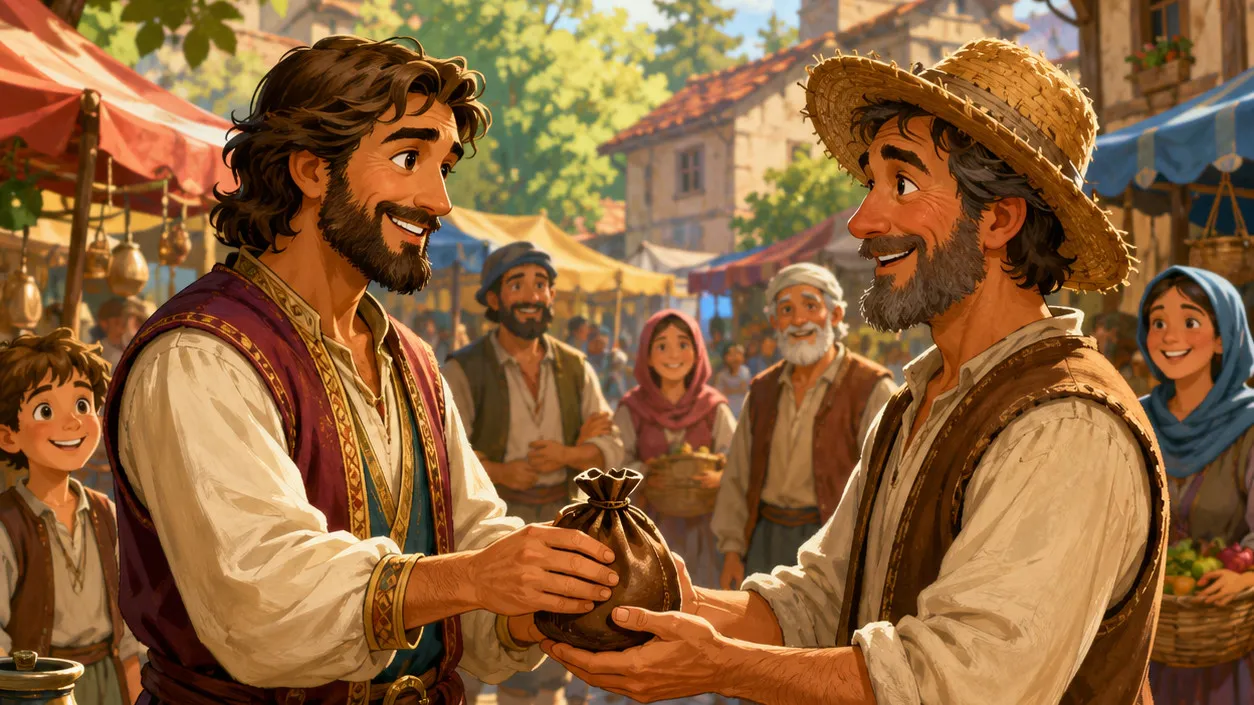
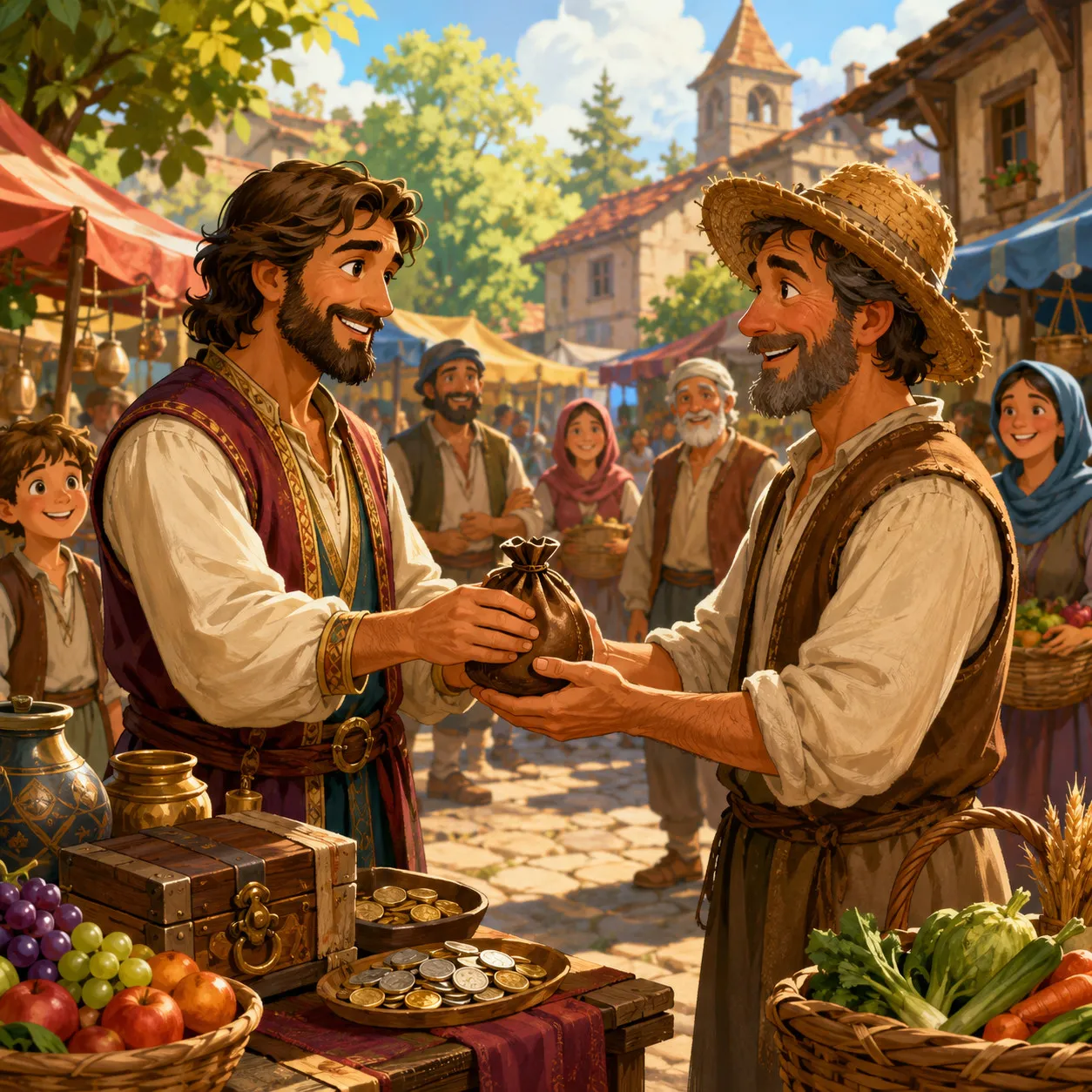
Dev smiled and handed it to him.
"You left it in my shop."
Rohan opened the pouch with trembling hands. Every note was exactly where he had left it.
"I don't know how to thank you," he said.
"You already have," Dev replied. "You trusted my shop enough to visit. Returning what belongs to you is simply the right thing to do."
News spread quickly through the village.
People admired Dev, not because he had returned the money, but because he had done so without expecting praise or a reward.
Several weeks later, traders from nearby towns visited the Friday market looking for reliable business partners. Many villagers recommended Dev without hesitation.
"He never changes the weights."
"He always tells the true price."
"He keeps his promises."
One of the traders offered Dev a chance to supply grains to shops in three neighboring villages.
The opportunity doubled his business.
As the months passed, Dev hired two assistants. Before they began work, he gave each of them the same advice.
"Our shelves can become full again if they are empty," he said.
"We can earn more money if sales are slow."
"But once people stop trusting us, rebuilding that trust is much harder."
The assistants remembered those words every day.
One evening, a young customer accidentally paid twice for a bag of flour. One assistant noticed the mistake and immediately returned the extra money.
Another customer later found that a bag of rice weighed slightly more than he had paid for. Instead of asking for additional payment, Dev smiled.
"Consider it my thank-you for visiting."
The customer returned many times and introduced his relatives to the shop.
Years passed.
The small store grew into the largest trading house in the district. Farmers preferred selling their crops to Dev because they knew they would receive honest measurements and fair prices.
Parents often brought their children to the market and pointed toward the busy shop.
"That business became successful because its owner never forgot the value of honesty," they would say.
Whenever young shopkeepers asked Dev for the secret behind his success, they expected to hear advice about profits, advertising, or bargaining.
Instead, he always answered with a gentle smile.
"People remember how you make them feel. If they know they can trust you, they will return again and again. Money may fill your cash box, but honesty fills your future."
The market continued to grow each year, but the most valuable thing sold there could never be placed on a shelf.
It was trust.
Vocabulary Words
The Moral
Honesty builds trust, and trust creates lasting success.
Life Lesson
People may forget what we own, but they remember how we treat them. Honest actions, even when nobody is watching, create a reputation that lasts a lifetime.